

Archivio della Società romana di storia patria vol. 147/II (2024) 11 – CAROCCI
6,00€
Codice DOI: 10.61019/ASRSP_147_II_11
File formato PDF
Roberto Carocci
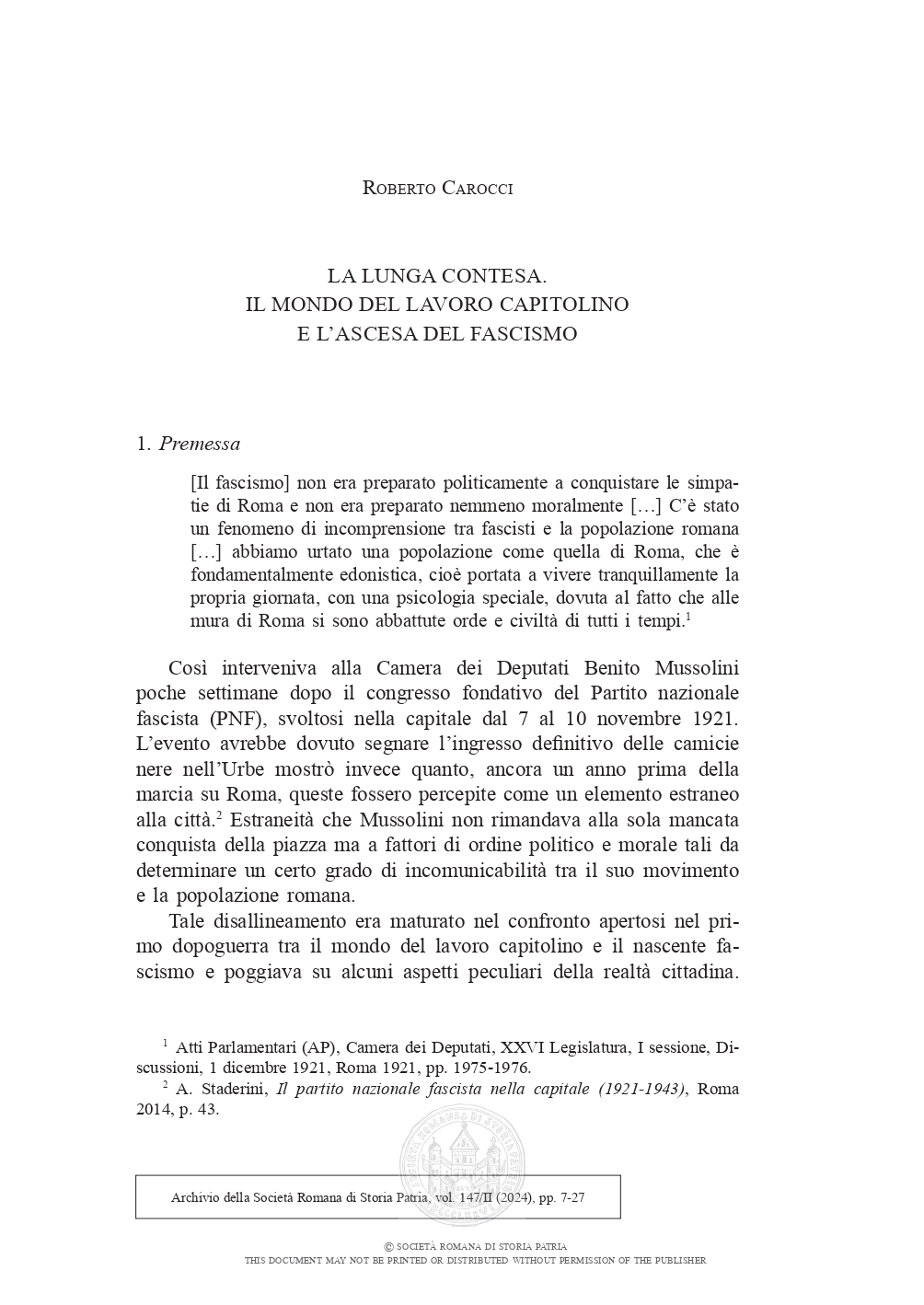
La lunga contesa. Il mondo del lavoro capitolino e l’ascesa del fascismo.
L’articolo indaga la lunga contesa intercorsa nel primo dopoguerra tra il nascente movimento fascista e l’associazionismo operaio romano che, a causa delle difficili condizioni materiali della popolazione, ebbe un rapido sviluppo, contraddistinto da una robusta ripresa della conflittualità sociale con diffuse accentuazioni radicali e dalla larga affermazione elettorale del Partito socialista. Con l’aggravarsi della guerra civile nel resto d’Italia, segnatamente con l’attentato al teatro Diana di Milano nel marzo del 1921, si verificò uno spostamento nell’opinione pubblica in favore delle componenti reazionarie, fino ad accettare – se non a sostenere, come nel caso di una parte della stampa cittadina – le azioni delle camicie nere contro il “pericolo rosso”. Tra un sempre più marcato utilizzo della violenza e un’insistente ritualità, il fascismo trovò una sua pur lenta strada di affermazione, tuttavia frenata dalla capacità di resistenza delle classi subalterne cittadine che si concretizzò nella nascita di organismi unitari di difesa. Momento culminante del confronto tra associazionismo operaio e il movimento di Mussolini si verificò in occasione del congresso di fondazione del Partito nazionale fascista. Il fascismo riuscì a conquistare la città solo nell’ottobre del 1922, potendo da quel momento fare affidamento anche sugli apparati repressivi dello Stato, tuttavia faticò lungamente a penetrare tra i lavoratori romani e una parte consistente della cittadinanza.
The long dispute. The Capitoline labor movement and the rise of fascism
The article examines the long-standing dispute between the emerging fascist movement and the Roman workers’ association during the early post-war period. Due to the challenging material conditions faced by the population, the workers’ association experienced rapid growth, characterised by a resurgence of social conflict with widespread radical tendencies and the significant electoral success of the Socialist Party. As the civil war escalated in the rest of Italy, particularly following the attack on the Diana Theatre in Milan in March 1921, public opinion shifted in favour of the reactionary elements. Some sections of the city press even supported the actions of the black shirts against the ‘red danger’. Amid an increasingly pronounced use of violence and insistent ritualism, fascism slowly gained affirmation; however, it was held back by the resistance of the city’s subaltern classes, which manifested in the formation of unified defence organisations. The culminating moment of the confrontation between labour associationism and Mussolini’s movement occurred at the founding congress of the National Fascist Party. Fascism only conquered the city in October 1922, from which point it was able to rely on the state’s repressive apparatuses. However, it struggled for a long time to gain a foothold among Roman workers and a considerable proportion of the population.
Archivio della Società romana di storia patria, 147/II
luglio 2025, pp. 21